
Finishing stages from A to Z – Part 3
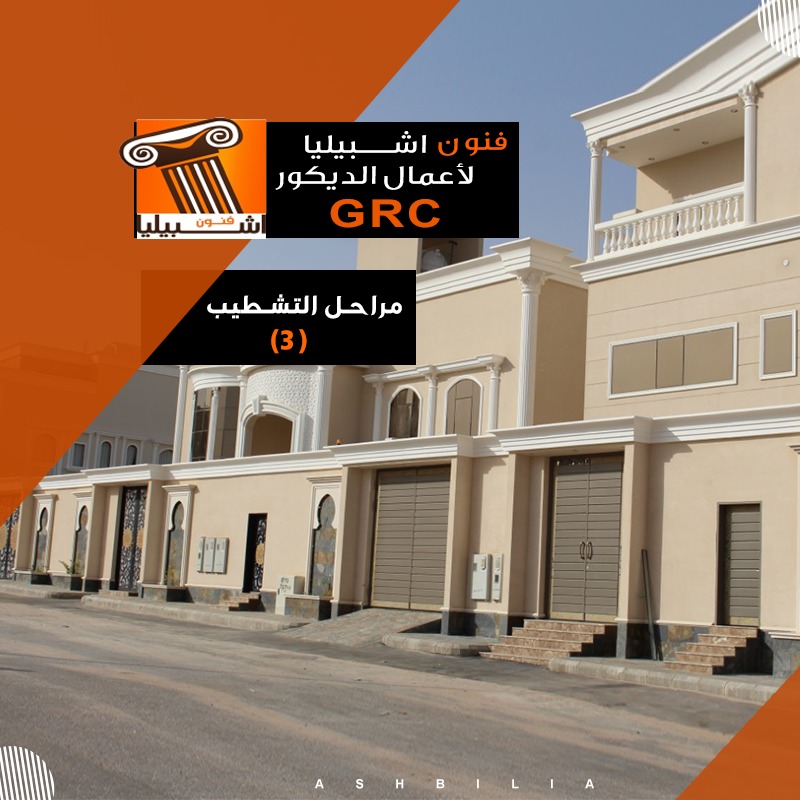
Finishing Stages from A to Z – Part Three —
In Part Two, we stopped after completing the plastering work and preparing for the waterproofing and thermal insulation stage. We now continue the finishing stages according to engineering specifications and standards.
Finishing Stages – Part Three :-
- The insulation contractor inspects the plaster work on the roof to ensure readiness before starting the insulation work.
- The roof and annex surfaces are cleaned thoroughly.
- For ground-level annexes, it is preferable to plaster the inverted bridge from above to carry out waterproofing and thermal insulation simultaneously.
-
Then, work begins on waterproofing and thermal insulation for the roofs and its types:
– Waterproofing rolls with a thickness of no less than 4 mm
– Thermal insulation using polystyrene boards – foam
– Thermal insulation using perlite
Insulation Method :-
- – Perlite is used, which is a lightweight granular material with a 100-liter bag capacity. Note that type (g4) is for roofs and is coarse with larger granules.
- Type (g3) is for some agricultural applications but can be used in plastering to provide thermal insulation.
- – Perlite is mixed well with water and cement until the mixture is non-fluid to be applied on the surface.
- – The perlite should slope toward the drainage channels, with a minimum thickness of 4–5 cm at the lowest point of the roof.
- It can reach 10 cm or more in elevated areas depending on the roof surface.
- – The perlite is sprayed with water for two days.
- – Then, a cement slurry is applied over the perlite and sprayed with water for another two days.
- – A 7–10 cm chamfered edge is created on the roof edges at the coping, walls, and central AC openings, if any.
- – After the roof dries completely, a primer waterproof coating is applied.
- – The waterproofing membrane is then applied with a thickness of at least 4 mm, ensuring good quality materials.
- – The waterproofing is installed on the walls around the roof at a height of 25–30 cm along the entire perimeter.
- – The roof is filled with water for three days to test the waterproofing quality.
- – The water is then drained by the insulation company.
- – The plumber begins installing the water supply network on the roof, including the water collector, testing pipes with water and air pressure.
- – The insulation contractor then completes the insulation after the water installations are finished.
- Next, the tiler begins, delivering clean sand (dewan) for the roof, free of dirt.
- Then, tile work begins, installing tile bases, with main roof tiles used for the bases.
- The electrician installs cables from the main breaker to the internal panel, preferably one independent cable for each floor.
*********
This concludes Part Three of the finishing stages from A to Z. The final stage will be covered in the next article.
At Ashpilia Arts, we strive to capture the beauty of the past in classical and modern architectural designs for palaces, villas, hotels, commercial projects, and hospitality projects by carefully selecting architectural styles inspired by Roman, Greek, French, American, and other historic patterns.
For inquiries about GRC works, you can follow the ( Ashpilia Arts ) page on social media platforms.
For more information, visit our website / Ashpilia Arts for Decoration Works.

Learn more about GRC products for exterior facade decoration.
Learn More About GRC Products for Exterior Facade Decoration – – – Consulting and

Seville Arts… Our Value is in Our Human Resources – GRC
Ashpilia Arts .. Our Value Lies in Our Human Resources – GRC — Ashpilia Arts builds its conc

Compound, Villa, and Hotel… Stunning Designs with Ashbilia Arts – GRC
Compound, Villa, and Hotel… Stunning Designs with Ashbilia Arts – GRC The exterior design reflec
Leave a Reply